Explore ciphers, encodings,
and hidden patterns
Use interactive tools to encrypt classical messages, decode text formats, translate signals, inspect ciphertext, and learn how information changes form.
Whether you're a student, puzzle enthusiast, developer, or just curious about codes, the toolkit brings ciphers, encodings, and cryptanalysis into one practical workbench.
Try it right now
Type your message and watch it get encrypted in real time, with a character-by-character breakdown.
Work with ciphers and encodings
Encrypt, decode, translate, and analyse text directly in your browser, with guides that explain what each tool is doing.
Caesar Cipher
The simplest substitution cipher. Shift each letter by a fixed number and see why this is the gateway to classical cryptography.
Vigenère Cipher
A polyalphabetic cipher using a keyword. It resisted casual cryptanalysis for centuries and still teaches beautifully.
Frequency Analysis
Visualize letter frequencies and learn the codebreaker’s essential technique for attacking substitution ciphers.
Base64 Encoder
Turn text into Base64 and decode it again. Useful for understanding how bytes survive inside text-based systems.
Base32 Encoder
Encode bytes with a restricted alphabet that is easier to copy, type, and carry through fussy systems.
More Tools
Ciphers, encodings, Morse, analysis & more
View all toolsHow it works
No sign-ups, no installations. Three steps to start encrypting.
Choose a Tool
Browse ciphers, encodings, and analysis tools. Each one includes a clear description and difficulty level.
Enter Your Text
Type or paste your message. Adjust shifts, keywords, rails, grids, padding, or other tool-specific settings.
Get Instant Results
See the output immediately, with educational context that helps explain what changed and why.
Understand the systems behind the tools
Our guides explain classical cryptography, practical encodings, and cryptanalysis with clear examples of how each system transforms text and why those transformations matter.
Historical Context
Learn who used each cipher or encoding, why it mattered, and how message systems shaped war, software, puzzles, and communication.
Mathematical Foundations
Understand modular arithmetic, alphabets, bytes, keys, probability, and the ideas that sit behind each system.
Cryptanalysis Techniques
Discover how ciphers are broken, from brute force to frequency analysis and pattern spotting.
Scytale — Sparta
First known military cipher device
Caesar Cipher — Rome
Julius Caesar's simple letter shift
Alberti Cipher Disk — Italy
Invention of polyalphabetic ciphers
Vigenère Cipher — France
"Le chiffre indéchiffrable" for 300 years
Enigma Machine — Germany
Electromechanical rotor cipher
RSA — Modern Era
Public-key cryptography begins
Dive deeper into codes and encodings
From beginner primers to detailed cryptanalysis and encoding walkthroughs, explore the theory, history, and practical uses behind the tools.

The Caesar Cipher: Rome's Secret Weapon
How a simple letter shift helped Julius Caesar communicate with his generals, and why it remained useful for centuries.
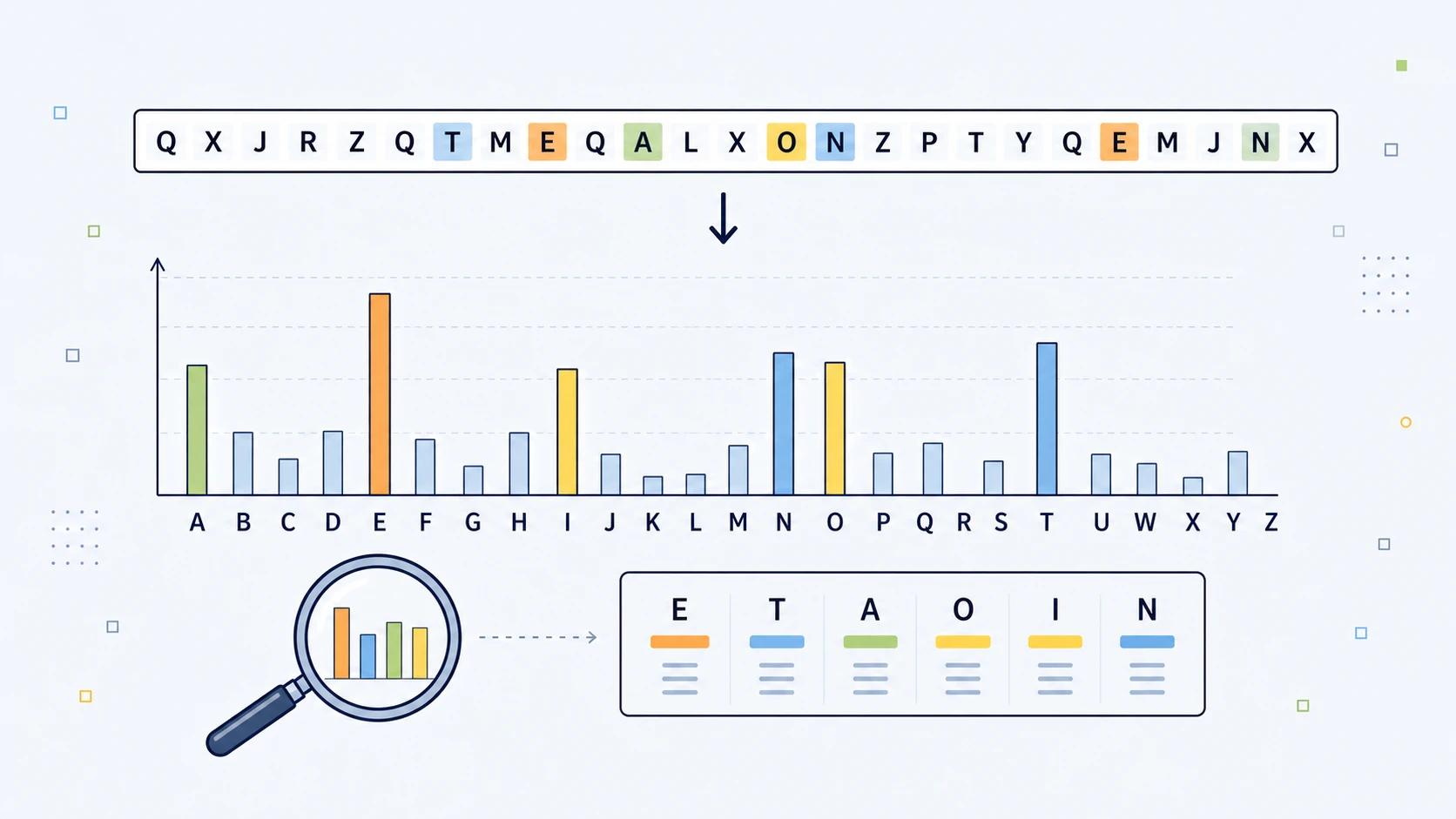
Breaking Ciphers with Frequency Analysis
Why E is your best friend in codebreaking, and how letter patterns expose simple substitutions.
Enigma: The Machine That Changed WWII
How the Allies attacked rotor-machine encryption, and why Bletchley Park became central to modern codebreaking.
Ready to explore the toolkit?
Jump into cipher, encoding, and analysis tools or start with the introductory guides. No account needed — everything runs right in your browser.